News Story
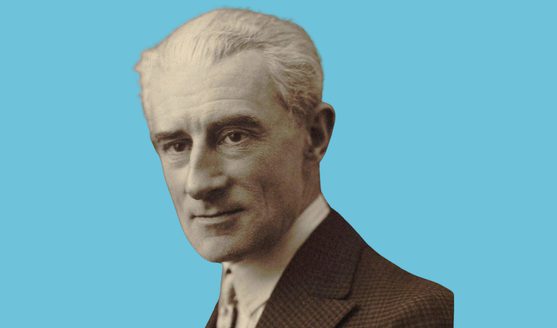
Mother Goose Suite byMaurice Ravel: The Hidden Ravel
Maurice Ravel was, by all accounts, an iconoclast. Famously described by Stravinsky as "the most perfect of Swiss watchmakers", he was often criticised during his lifetime for being overly sophisticated and lacking in emotion. Instead, he was a master of musical craftsmanship to a staggering degree: transcribing intricate piano pieces into lush orchestral works, forging the iconic ballet Boléro, a fifteen-minute masterclass in musical tension, and creating an entire piano concerto, one of the most formidable in the repertoire for the left hand alone. And yet, beneath this astounding technical skill was a secret.
Despite remaining both a bachelor and childless throughout his adult life, Ravel never lost his youth.
His own childhood was a happy one. His mother was a free-spirited, barely literate Spaniard who filled his head with stories, while his father was a Swiss-French civil engineer, inventor, and early pioneer of the automobile industry. In short, they were fundamentally a family of dreamers. But all good dreams come to an end, and so, in his late thirties, adrift after the death of his father, the Godebski family took Ravel in and became, in effect, his second family. He often stayed at their country house, La Grangette, at Valvins near Fontainebleau, and it was there that Ravel completed Ma mère l'Oye.
The work was written as a piano duet for the Godebskis' children, Mimie and Jean, aged six and seven. Ravel dedicated the work for four hands to them, just as he had earlier dedicated his Sonatine to their parents. However, it was Jeanne Leleu, aged eleven, and Geneviève Durony who ultimately gave the premiere after the young dedicatees experienced a sudden bout of stage fright before the first concert of the Société Musicale Indépendante on 20 April 1910.
Across its five movements, Ravel brings to life some of the world's best-known fairy tales with a surprising tenderness often unseen elsewhere in his music. Each movement is like a miniature diorama of an individual fantasy world, painstakingly crafted using the techniques he had pioneered in his previous works.
The opening Pavane, for instance, is an intricate assembly of the two pianists' hands, recalling Satie's Gymnopédies. The two piano parts dance and interlock around one another, as though the pianists are the prince creeping through the sleeping court.
The second movement begins with ascending scales; its music floats and shimmers before descending chromatically between keys, perfectly capturing the uncertainty of Little Thumb as he loses his way.
The third movement is a whirl of pentatonic scales, stacking upon one another like the floors of a musical pagoda, symbolising the Empress of the Pagodas. The fourth movement is a waltz of sheer delight. Here, the chaotic, shambling chromaticism of the Beast's theme is contrasted with Belle's delicate waltz, and what begins as a simple dance becomes a beautiful call and response between the two pianists.
But the twist in this tale comes in its finale, the surprisingly sombre The Fairy Garden. Struggling, trudging chords break into a moment of monumental truth. The pianists' hands glide across the breadth of the keyboard in sweeping glissandi, and suddenly this is no longer the perfumed melancholy of Debussy or the delicate sensitivity of Fauré, but something so much deeper and more open: a transformation of the French countryside into myth.
What makes Mother Goose so enduring is that it is a piece that fights against cynicism. In the same way as his own hero, Mozart, Ravel concealed beneath technical mastery and sophistication an enduring youthfulness.
Indeed, just two years before, when he visited his old pupil and friend Ralph Vaughan Williams in London, Ursula Vaughan Williams was amused to find that "it appeared that steak and kidney pudding with stout at Waterloo Station was Ravel's idea of pleasurably lunching out."
And so, in Mother Goose, the hidden Ravel finally appears: not a detached craftsman, but a man in search of a lost childhood and, for a brief moment, finding it.
Hear more on Menuhin Hall Family Day, on 28 June 11.00 am, part of our Summer Festival.
Related items

Meet the Musicians: Claire Martin OBE and Martin Sjöstedt on the modern jazz scene
21 September 2026Claire Martin has established herself as a tour de force on the UK jazz scene, gaining many awards, including winning the British Jazz Awards as Best Vocalist…
Meet the Musician: Llŷr Williams on Childhood, Liszt and ‘The Most Tuneful Ballet of All Time’
3 September 2026Welsh pianist Llŷr Williams is widely admired for his profound musical intelligence and for the expressive and communicative nature of his interpretations. He…
Menuhin Recommends... Romeo and Juliet by Sergei Prokofiev
14 August 2026‘Two households, both alike in dignity...’ There are few pieces of music that can make a concert hall feel simultaneously enormous and intimate. Prokofiev’s…