Why Summer School is Important for Young Classical Musicians – With Ning Kam
News Posted: 19 May 2026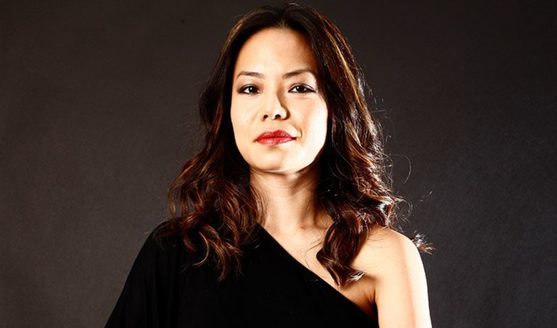
News Story
What does it take to shape a musician?
Classical music is so often defined by the finished performance - the soloist on stage. But behind every musician stands an equally dedicated teacher, shaping and refining raw talent into something truly compelling.
Ahead of her appearance on our prestigious Summer School faculty, Professor of Violin Ning Kam spoke with the Yehudi Menuhin School about her journey in music education and her approach to guiding the next generation of young musicians.
Yehudi Menuhin School: So, who was the first teacher to truly inspire you? And how did they shape your musical journey?
Ning Kam: That’s actually a really hard question to answer, because my first teacher was my dad. No teacher on the planet will ever make as much of an impact on you as your dad, right? I used to have lessons for two hours every day. So, yeah, I would say he really instilled a sense of discipline, and it has really carried me forward.
But while my father was my first teacher, the person who influenced me most musically after him was Donald Weilerstein. He now teaches in Boston and previously taught at the Cleveland Institute of Music, where I completed my master’s degree.
He’s unlike any other teacher I’ve ever had, in the sense that he doesn’t just give you his opinion, he teaches you to teach yourself. It’s a much slower process because you must digest everything, he says and apply it. He asks a lot of questions – it's like leading the witness – but it gets you to think. It’s all very logical and based on the score.
The result of that is that every single student in his class played very differently from each other, which I now think is the hallmark of a great teacher: when your students are not little copies of you, as good as they might be. To get them to think individually means everyone will have their own vision of a piece, even though it’s based on the score.
That’s made a lasting impact on me, and I take a lot of my teaching style from that. I’m really grateful for the four years I spent with him.
YMS: And who was your father? Was he a professional musician or primarily a teacher?
Ning Kam: As far as my father is concerned, he was not only a professional musician but also a professional artist. He was a painter as well. He did both equally. He ran a music school and also an art school, using the same premises to teach both. He also had a children’s orchestra, which I was part of. So he was really full-on with teaching.
YMS: So, would you say it was a very musical household?
Ning Kam: Very musical. The only non-musician in my family is my mother – she was the only normal person in the house! I have a brother as well, and he’s a drummer. So yes, very musical.
YMS: So do you think students can expect a very practical approach from your teaching based on your instruction in Cleveland?
Ning Kam: Yeah, I always say to my students: you are teaching yourself in between. You’re going to be your own best teacher and your own best student.
Eighty percent of the time you’re with yourself, so what you do in that time, I’m going to hear in the twenty percent I spend with you. So you need to make the most of it.
It’s very practical. I don’t really subscribe to the idea that you’re just born a musician and that talent alone determines success. You can be talented, but you’ve got to use your brain as well.
Some people who are slower initially but think things through logically can go really far – maybe even further than someone who can just “do it.” Because if you can just do it, you don’t always think about how. Later on, when things don’t come as easily, you might not know how to fix it.
So my approach is that you must think logically about how you make a sound – what the character is on the page, and how you produce that sound physically. It’s very practical.
When you apply your brain, you discover more and more. It’s like a never-ending maze - there’s always something new.
I also encourage students to reverse engineer great playing. If you hear something amazing, try to work out why. Like a chef tasting a dish and identifying the ingredients, you can do the same with playing. Watch how someone moves, then try it yourself and see what happens.
You figure out how to make something sound the way you want it to sound, putting yourself in the audience’s seat. What would I want to hear? Then: how do I construct that sound?
YMS: Do you think open interpretation should be encouraged more?
Ning Kam: I think so. I came from a background where you start with technique – get the notes right, then add meaning later. But I don’t agree with that now.
It’s like speaking; you wouldn’t read something completely flat. Expression is natural. So why practise without it? That’s something you have to force yourself to do – it's not natural.
If you separate technique and expression too much, it becomes very hard to bring them together later. That shift in thinking came from my time with Donald Weilerstein. He always said you should never play pieces cold – you should always play with some level of expression. That really transformed my perception of teaching.
YMS: So, if you were to summarise what people can expect from you?
Ning Kam: I would say, I’ll help you play in the way you would most want to hear yourself. I’m putting the ball back in your court – what do you want?
Surely you don’t want to sound technically proficient and nothing else. You’ve got to think about the best version of yourself on stage and what would that sound like?
YMS: Why is a Summer School important?
Ning Kam: It’s a unique environment. I was a student at YMS myself. The intensity of instruction, the chamber music, the orchestra, alongside academic subjects – it's all in one place. It’s very intense, but it’s also a microcosm of professional life: performing, dealing with nerves, playing in front of people who know your repertoire. It’s like being thrown in the deep end and learning to swim. The quality of teaching is amazing, and the performance opportunities are incredible. It’s a small place, so there’s a lot of personal attention.
YMS: Has that helped you on the concert platform?
Ning Kam: Yes, 100%. Performing is a completely different skill. You can love music, but performing is another challenge. It’s emotional, and you have to learn how to handle that. The earlier you experience it, the better.
YMS: Would you say the performance environment is invaluable?
Ning Kam: Yes, it’s a microcosm of the real world: not everyone will love you, and not every performance will go well. But the facilities are incredible, a proper concert hall, recording opportunities, and feedback. Students now have amazing resources. It really feels like a professional environment.
YMS: Finally, as a musician, how essential is collaboration in that setting?
Ning Kam: Chamber music isn’t just about playing well, it’s about people skills. You need to communicate, negotiate, and present your ideas in a way others will respond to. Those are life skills. Learning how to collaborate, especially when you have strong ideas, is incredibly important. If you didn’t have that, you’d become very insular. Collaboration teaches you how to work with others, build something together, and create something that stands up in performance.
That’s a skill you’ll need for the rest of your life.
Summer School returns in 2026 with two courses offering instrumental tuition, ensemble work, concerts, and workshops at our Surrey campus. Open to students aged 11–16 (minimum Grade 5), with residential and non-residential options. Applications close on 19 June 2026.
Related items
Meet the Musicians: Claire Martin OBE and Martin Sjöstedt on the modern jazz scene
21 September 2026Claire Martin has established herself as a tour de force on the UK jazz scene, gaining many awards, including winning the British Jazz Awards as Best Vocalist…
Meet the Musician: Llŷr Williams on Childhood, Liszt and ‘The Most Tuneful Ballet of All Time’
3 September 2026Welsh pianist Llŷr Williams is widely admired for his profound musical intelligence and for the expressive and communicative nature of his interpretations. He…
Menuhin Recommends... Romeo and Juliet by Sergei Prokofiev
14 August 2026‘Two households, both alike in dignity...’ There are few pieces of music that can make a concert hall feel simultaneously enormous and intimate. Prokofiev’s…