Meet the Musician: Llŷr Williams on Childhood, Liszt and ‘The Most Tuneful Ballet of All Time’
News Posted: 3 Sept 2026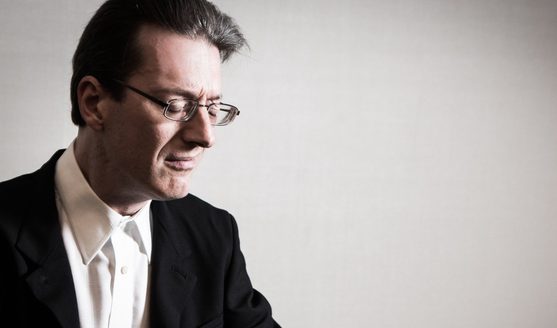
News Story
Welsh pianist Llŷr Williams is widely admired for his profound musical intelligence and for the expressive and communicative nature of his interpretations. He is a regular performer at leading venues and festivals, including Wigmore Hall, Perth Concert Hall, the St David’s and Dora Stoutzker Halls in Cardiff, and the Edinburgh and East Neuk Festivals. He also has a long association with the Royal Welsh College of Music and Drama, where his acclaimed recital cycles have explored the music of Beethoven, Schubert and Chopin.
Ahead of his Menuhin Hall debut, we caught up with Llŷr to talk about the repertoire he has chosen, his approach to performance, and his advice for the next generation of musicians.
Yehudi Menuhin School - It's your debut at the Menuhin Hall; what are you most looking forward to experiencing?
Llŷr Williams: I've never visited the Menuhin School before and so I'm looking forward to discovering the dimensions and acoustics of the hall.
YMS - What can audiences expect from the programme you’ve chosen for this concert?
LW: The programme for the first half consists of Debussy's Children's Corner plus lots of small pieces by a diverse range of composers linked by a general theme of childhood. This idea was suggested to me earlier in the summer by a Festival that had Childhood as its particular theme. We eventually get to 'Juliet as a young girl' from Prokofiev's Romeo and Juliet - the most tuneful ballet of all time - in the composer's piano reduction. Transcriptions of orchestral music then form the link to the second half, when I'll be playing Liszt's arrangements of Bellini and Wagner.
YMS - What draws you to the repertoire you’ll be performing, and is there a particular piece you’re especially excited to share?
LW: I'm always excited to be playing Liszt's Reminiscences de Norma, an absolute tour de force exploring all possible aspects of piano technique - cantabile melodies, orchestral sonorities, double octaves, scales, arpeggios, passages which give the impression three hands are playing. In contrast to some of his other, more virtuosic compositions, there is also real depth here, and he manages to convey some of the essence of Bellini's opera.
YMS - You’re known for bringing a strong sense of storytelling and character to your performances. What do you hope audiences take away from your concerts?
LW: I hope the audience will leave the concert having discovered something new. The sequence of small pieces will also contain items by lesser-known composers like Mompou and Frank Bridge, whose Lament was written in memory of a nine-year-old girl killed in the Lusitania.
YMS - How does performing in a more intimate setting like the Menuhin Hall influence the way you approach a performance?
LW: Well, there are obvious advantages of playing in a more intimate setting in terms of connection to the audience, although I don't necessarily prepare my performances with a certain setting in mind. It's more a case of discovering the acoustics and possibilities of the hall when I get there.
YMS - What advice would you give to the young musicians at the Yehudi Menuhin School who are beginning their own professional journeys?
LW: Listen to as much music and as many different pianists as possible - it's remarkable that so many of the students I teach do not know whatsoever of some of the great pianists of the past. Also, focus on the sort of music that you like the most and with which you can identify - learning to play an instrument should never be a competition to play the same pieces as everyone else.
Hear Llŷr Williams live in concert on Thursday 10 September as part of our 2026/27 Autumn/Winter Season. Book your tickets now.
Related items
Meet the Musicians: Claire Martin OBE and Martin Sjöstedt on the modern jazz scene
21 September 2026Claire Martin has established herself as a tour de force on the UK jazz scene, gaining many awards, including winning the British Jazz Awards as Best Vocalist…
Menuhin Recommends... Romeo and Juliet by Sergei Prokofiev
14 August 2026‘Two households, both alike in dignity...’ There are few pieces of music that can make a concert hall feel simultaneously enormous and intimate. Prokofiev’s…
YMS celebrates another excellent year of A Level results
13 August 2026The Yehudi Menuhin School is proud to report that its pupils passed 100% of their A Level examinations, with 68% of all grades at A* - B. YMS Head, Robin…